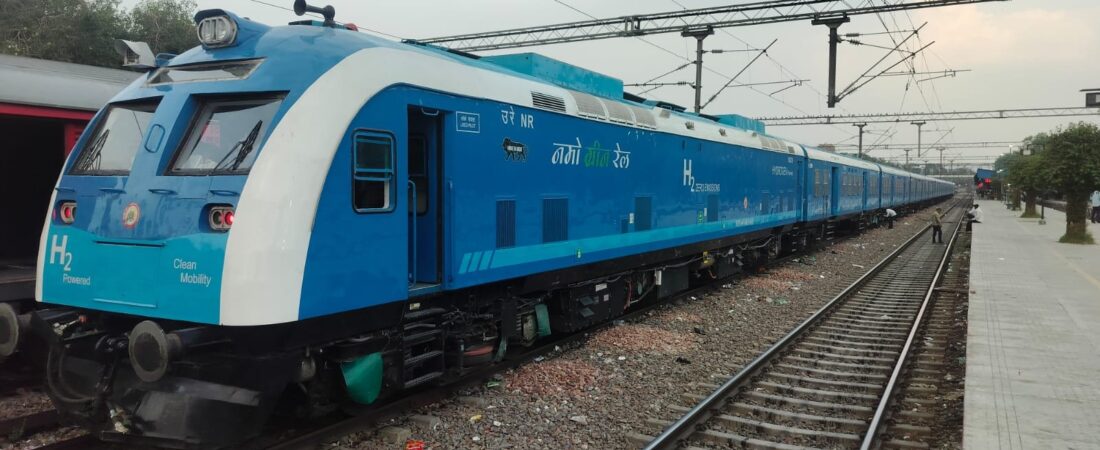
NEW DELHI: In a huge leap for sustainable transport, Indian Railways is set to launch the country’s first-ever hydrogen train next week. According to senior railway officials, Prime Minister Narendra Modi is scheduled to officially flag off the zero-emission train from the Jind railway station in Haryana on July 17.
The project, which replaces highly polluting diesel engines with advanced hydrogen fuel cells, marks a massive milestone in India’s push toward a net-zero carbon footprint. Following the inauguration, the train will immediately begin daily commercial operations on the Jind–Sonipat corridor under the Northern Railway division.
Hydrogen Train Route Details, Timings, and Budget-Friendly Fares
The inaugural hydrogen train will cover an 89-kilometre stretch between Jind and Sonipat in approximately two hours. Operating daily under train numbers 74010/74009, the service will make 13 commercial halts at stations including Pandu Pindara, Gohana, Mohana, and Barwasni.
According to the official timetable, the train will depart Jind at 07:40 AM and arrive in Sonipat by 09:40 AM. The return journey will commence from Sonipat at 10:40 AM, reaching Jind at 1:00 PM. The train will complete two round trips daily, carrying up to 682 passengers per trip (with a total daily capacity of around 2,600). In a major win for daily commuters, reports indicate that ticket prices will remain incredibly affordable, ranging between just ₹5 and ₹25.
ALSO READ: Ex-AAP Councillor Tahir Hussain Convicted in 2020 Delhi Riots Murder Case of IB Officer Ankit Sharma
RECOMMENDED FOR YOU: US-Iran War: Trump Bombs Iran After Attack On Ship With Indian Crew, 1 Dead
World’s Longest Hydrogen Train Powered by Indigenous Tech
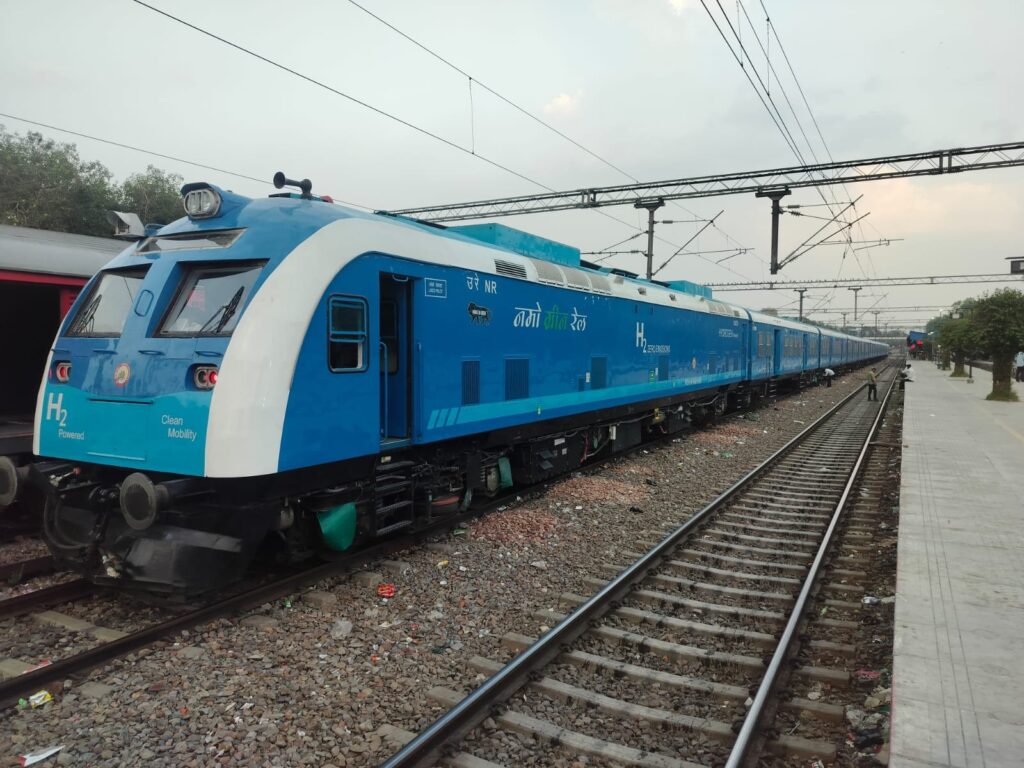
The hydrogen train has been entirely designed and developed in India by the Chennai-based Integral Coach Factory (ICF). Built on a Broad Gauge platform, it holds the record as the world’s longest hydrogen-powered train, featuring eight passenger coaches and two Driving Power Cars (DPCs).
The technology behind the train is revolutionary for the region. It is equipped with a 1,200 kW hydrogen fuel cell propulsion system (totalling 2400 kW across the two DPCs). The onboard fuel cells pull compressed hydrogen from reinforced storage tanks and mix it with oxygen drawn from the outside air. The resulting electrochemical reaction generates the electricity needed to power the train, emitting absolutely nothing but pure water vapour and heat. While designed to safely reach 110 kmph (having recently completed successful trials at 120 kmph), it will run at a maximum operational speed of 75 kmph on this pilot route.
Massive Refueling Infrastructure Built in Jind
To support this massive shift in railway operations, the government has established a dedicated, indigenous hydrogen storage and refueling facility at Jind. This facility features a 3,000-kg capacity fueling station and compression system, thoroughly vetted and licensed by the Petroleum and Explosives Safety Organisation (PESO).
The train itself is capable of storing 440 kilograms of compressed hydrogen and is expected to consume roughly 300 kg per day. Stringent safety protocols have been implemented, including continuous 24/7 monitoring via hydrogen leak and flame detectors. For heavy maintenance, the train will be towed in a powered-down, “dead” state by a standard diesel locomotive to a specialized depot at Shakurbasti in Delhi.
With this launch, India joins an elite club of nations—including Germany, Japan, and China—that have successfully deployed hydrogen-based railway technology for public transit.