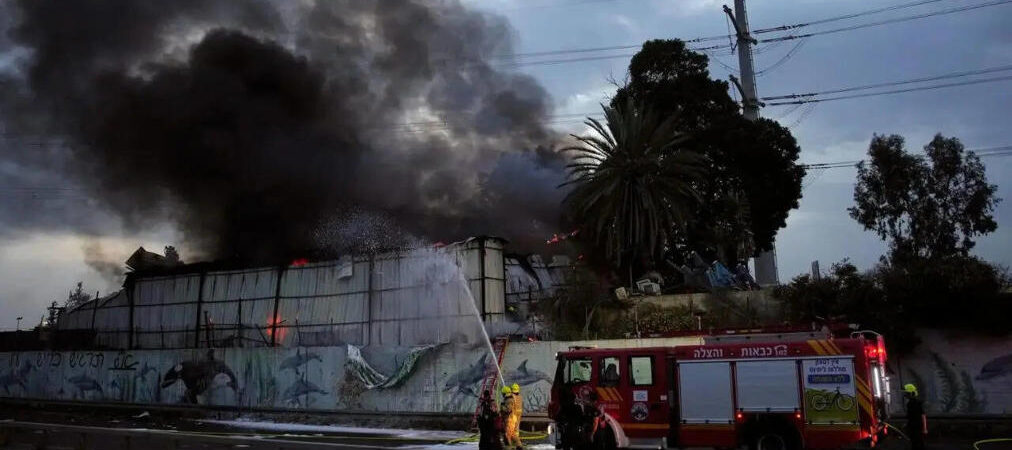
Just hours after threatening with locking 1000 missiles towards Iran, US President Donald Trump directed fresh wave of strikes on Tehran, US Military said on Saturday (July 11). The ongoing conflict between Washington and Tehran has dramatically expanded beyond localized maritime skirmishes, threatening to engulf the broader Gulf region. Following a series of aggressive maritime maneuvers by Iranian forces, the United States military initiated a third round of direct strikes on Iranian territory.
The strikes allegedly came after Iran attacked a civilian ship in Strait of Hormuz despite repeated warnings from Trump regarding ensuring safe passage. US Central Command also released a video to show alleged strikes on Iranian targets, it said that the military had struck more than 140 sites including drone and missile launch sites, and communication radars.
Explosions Heard In Bandar Abbas, Sirik Post Trump’s 1000 Missiles Warning
The strikes came hours after US President Donald Trump had warned Iran of hatching an assassination plot against him. Trump said he had instructed his military to lock and load 1000 missiles towards Iran if he was killed during the assassination attempt. Trump had further warned Iran to make a deal and reiterated that the nation won’t have a nuclear weapon.
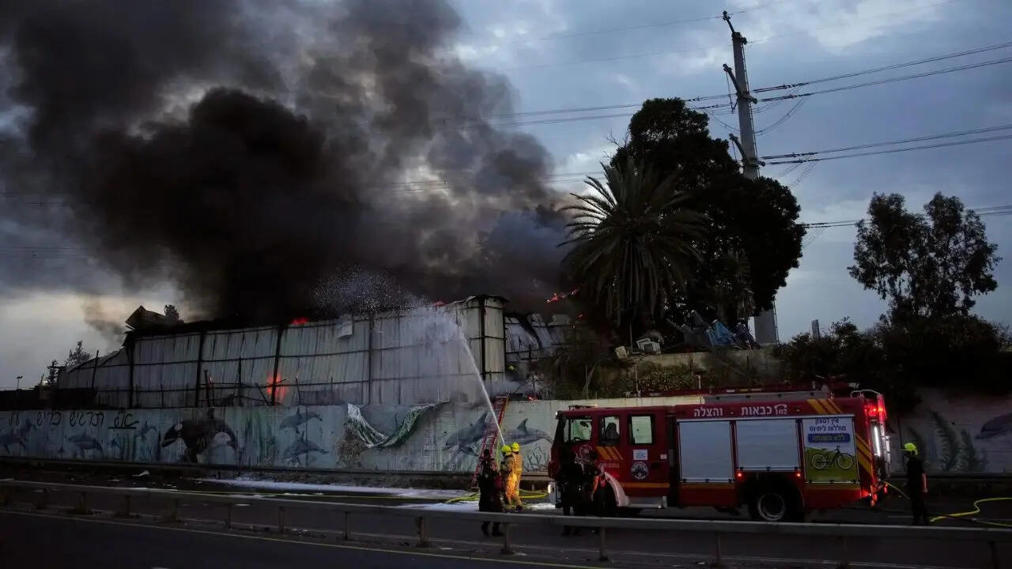
Overnight, United States forces launched a coordinated third wave of airstrikes targeting key Iranian coastal towns. The military operations specifically focused on degrading naval and radar installations in Bandar Abbas and Sirik. Defense officials stated that these strategic strikes were designed to cripple the offensive capabilities of the Islamic Revolutionary Guard Corps (IRGC) and secure the vital maritime chokepoint. The strikes come after Trump had struck these targets days ago, striking 90+ Targets across Iran.
Iran Retaliates: Missiles Target US Bases in Qatar, Oman, Kuwait & Bahrain
Rather than de-escalating, Iran has chosen a path of massive regional expansion. In a shocking counter-offensive, the IRGC claimed responsibility for disabling a second commercial vessel in the Gulf within the same 24-hour window. However, the most alarming development is Iran’s direct assault on American strongholds situated in allied nations.
Reports confirm that the IRGC fired multiple ballistic missiles at the US Bases in Qatar, Kuwait, and Bahrain which serve as the strategic headquarters for United States Central Command (CENTCOM) in the Middle East. Some reports also claimed that Iranian drones had struck some sites in Oman. By bringing these bases into the crosshairs, Tehran has significantly widened the theater of war despite Trump’s warning, putting neighboring Gulf Cooperation Council (GCC) nations on high alert and forcing a rapid re-evaluation of regional air defense protocols.
Global Oil Prices Soar Amid Middle East Volatility
The economic fallout from this direct military exchange has been instantaneous and severe. The Strait of Hormuz is a critical artery for the global energy supply chain, carrying roughly a fifth of the world’s daily oil consumption. The disabling of multiple civilian vessels has effectively paralyzed commercial transit in the sector.
Consequently, global markets have reacted with intense panic. International Oil Prices have spiked drastically as traders price in the risk of a prolonged blockade and widespread infrastructural damage. Financial analysts warn that if the conflict continues to draw in neighboring energy-producing nations, the resulting surge in Oil Prices could trigger a prolonged energy crisis, heavily impacting inflation and consumer costs worldwide.
The Threat of an All-Out Regional War
With back-channel diplomacy completely shattered, the situation remains highly fluid. The unprecedented ballistic missile attack on the Al Udeid Air Base crosses a major red line for Washington, while Iran shows no signs of stepping down its maritime blockade. As both nations continue to exchange heavy fire, the international community is bracing for the very real possibility of an all-out regional war. All eyes remain on the Pentagon’s next operational move and the global economic response.