SRIHARIKOTA: In a monumental day for the Indian aerospace industry. Skyroot Aerospace successfully executed the Vikram 1 launch from the Satish Dhawan Space Centre in Sriharikota. This historic event shatters the long-standing monopoly of the state-run Indian Space Research Organisation (ISRO), officially positioning India’s private sector as a formidable player in the global commercial space race.
Codenamed “Mission Aagaman” (Arrival), the highly anticipated Skyroot Vikram 1 launch represents the country’s first-ever privately designed, developed, and manufactured orbital-class rocket to breach the Earth’s atmosphere and deliver payloads into Low Earth Orbit (LEO).
Technical Specs: What Powers the Vikram 1?
The engineering behind the Skyroot Vikram 1 launch is a marvel of modern space technology. The Vikram-1 is a highly advanced, three-stage solid-propulsion launch vehicle engineered specifically for the rapidly expanding commercial small satellite market. Standing at an impressive height, the rocket features a 3D-printed liquid bipropellant upper stage, known as the Raman stage, which provides the precise thrust required for accurate orbital insertion.
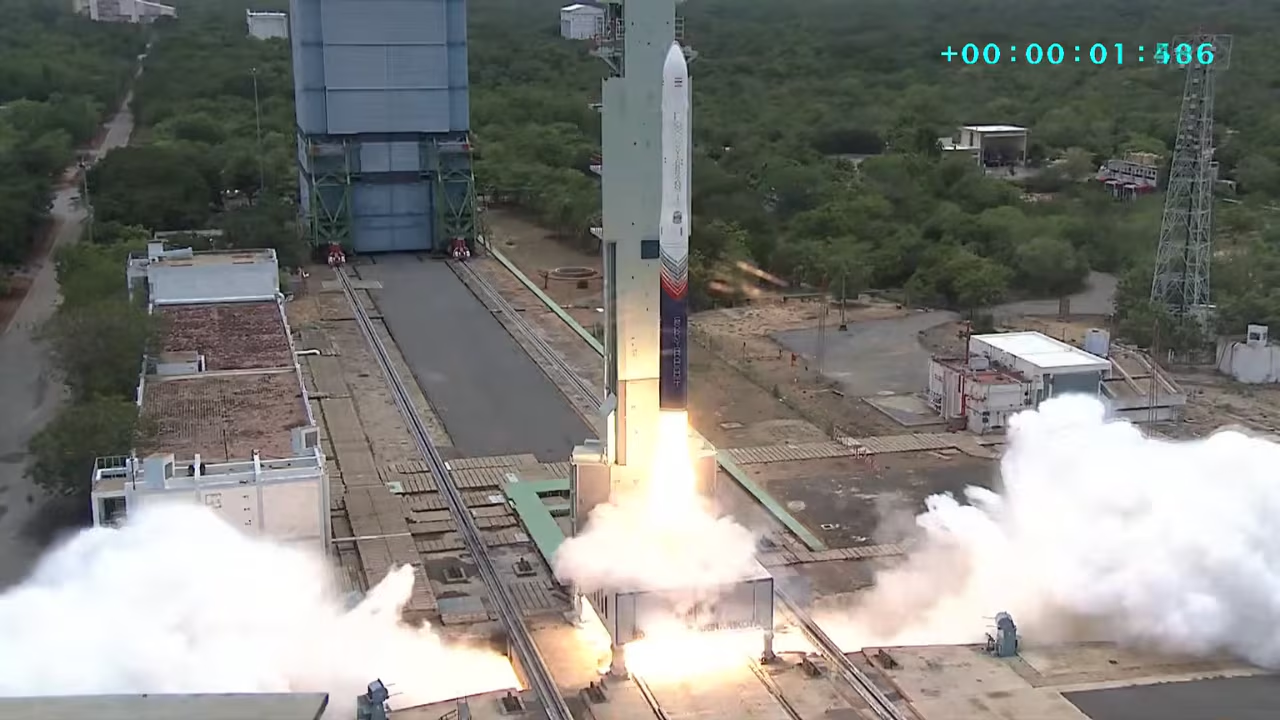
Capable of carrying a payload of approximately 300 kilograms into a 500 km Low Earth Orbit, the vehicle is built using advanced carbon-composite structures. This makes the rocket significantly lighter and more cost-effective than traditional metallic launch vehicles. Furthermore, Skyroot designed the Vikram-1 architecture to require minimal launch infrastructure, allowing for rapid assembly and deployment within just 24 to 72 hours—a massive selling point for global satellite operators.
ALSO READ: Sonam Wangchuk Forcefully Admitted to Hospital Amid NEET Protests
RECOMMENDED FOR YOU: PM Modi Flags Off India’s First Hydrogen Train From Jind
The Payload: Postcards, Startups, and Cosmic Art
The payload fairing of the Skyroot Vikram 1 launch was packed with an array of symbolic and commercial items. Acting as a critical technology demonstrator, the rocket successfully deployed three micro-satellites developed by domestic space-tech startups, effectively validating the rocket’s commercial viability.
Adding a deeply patriotic and cultural touch to the mission, the Vikram-1 also carried a collection of handwritten postcards into space. Among them was a personalized note from Prime Minister Narendra Modi bearing the message “Vande Mataram,” alongside well-wishes from Skyroot engineers, early investors, and veteran Indian astronauts. Additionally, a unique piece of space-rated artwork titled “Cosmic Bloom” was bolted to the upper stage, serving as a tribute to the intersection of human creativity and scientific exploration.
The Future of India’s Commercial Space Sector
The flawless execution of the Skyroot Vikram 1 launch proves that India’s recent space sector reforms and privatization mandates are yielding spectacular results. By offering highly competitive launch costs and rapid turnaround times, Skyroot Aerospace is now positioned to capture a significant slice of the lucrative global small-satellite launch market.
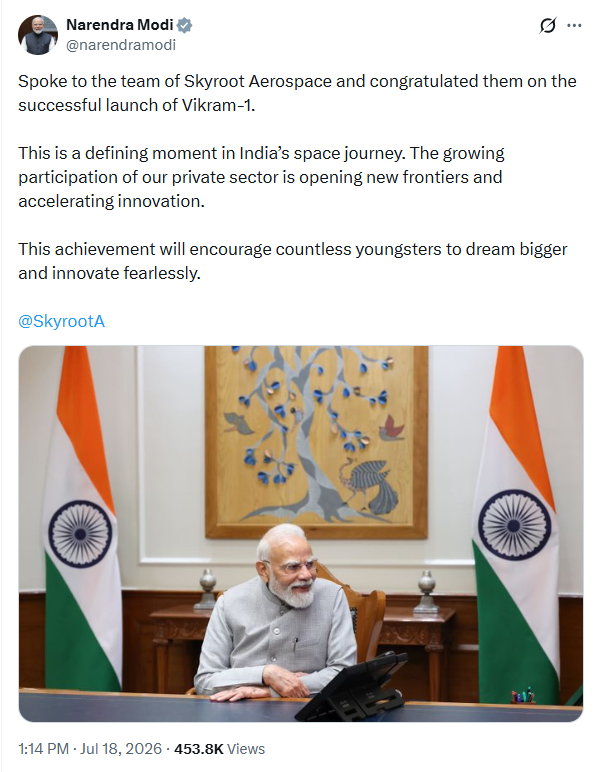
As the Vikram-1 successfully completes Mission Aagaman, it paves the way for the heavier Vikram-2 and Vikram-3 variants currently in development. Today’s launch ensures that India is not just a participant in the modern space race, but a dominant commercial hub for the future of orbital logistics.