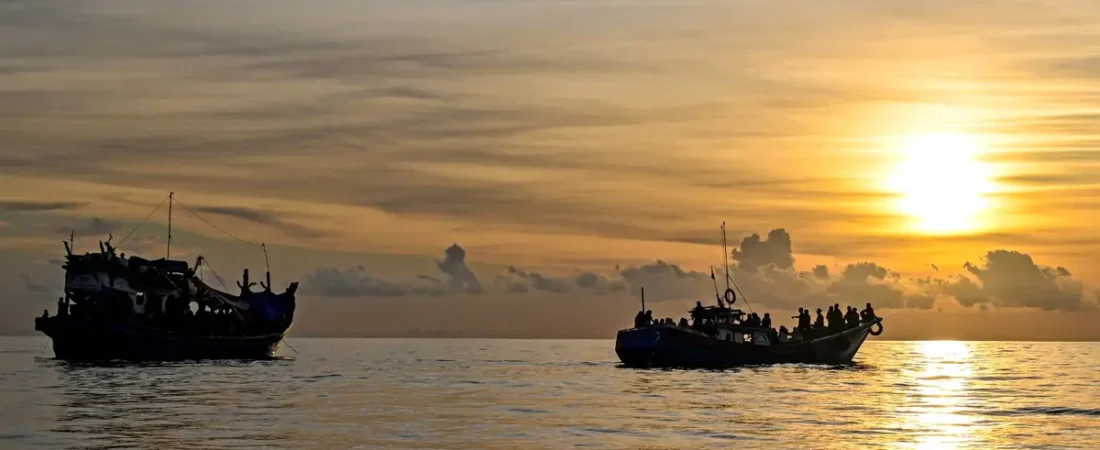
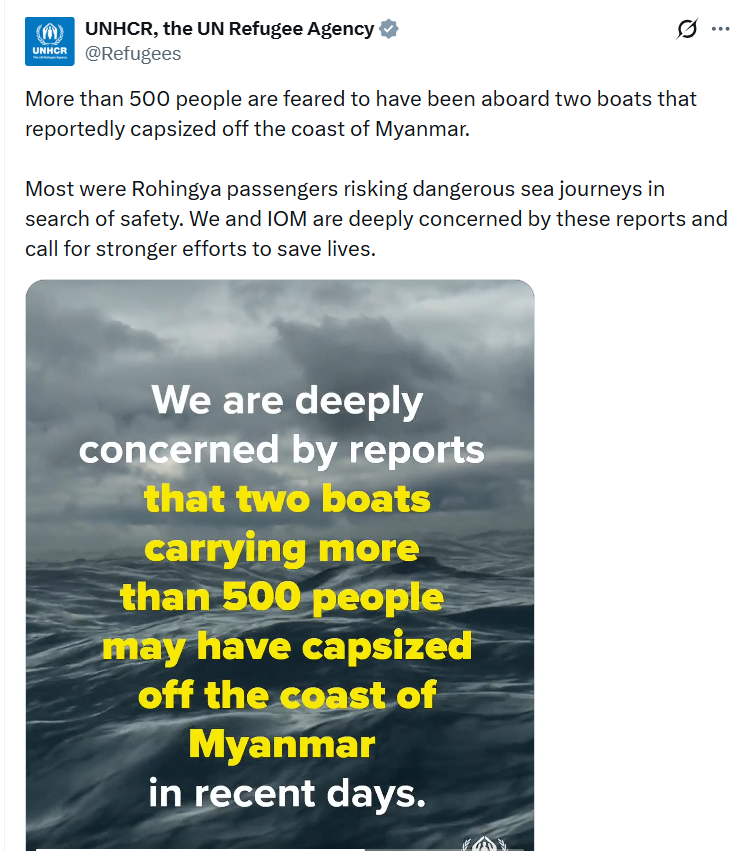
YANGON: A catastrophic humanitarian tragedy is unfolding in the perilous waters of the Bay of Bengal. International aid agencies issued a dire joint alert on Thursday, revealing that more than 500 people are feared dead after a double Myanmar boat capsize occurred off the country’s western coast.
According to coordinated reports from the United Nations High Commissioner for Refugees (UNHCR) and the International Organization for Migration (IOM), the victims of this horrific Myanmar boat capsize are predominantly members of the heavily persecuted Rohingya minority. The refugees were fleeing the escalating violence, extreme poverty, and systemic oppression that continue to ravage Myanmar’s conflict-ridden Rakhine State.
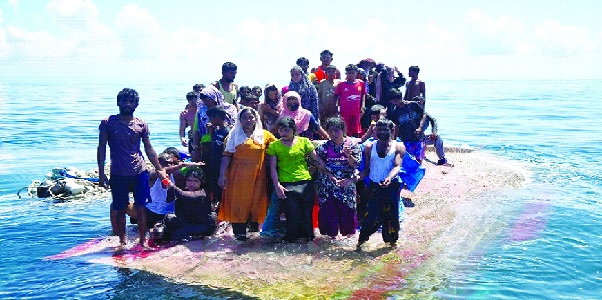
Myanmar Boat Capsize: What We Know So Far
The maritime disaster linked to the incident appears to have occurred in two distinct incidents. The first vessel, carrying an estimated 250 men, women, and children, departed the coast in late June but vanished from all tracking radars shortly after setting sail. The second boat, believed to be packed with roughly 280 passengers, is suspected to have capsized off Myanmar’s Ayeyarwady coast on July 8 after encountering severe monsoon weather systems.
Many of the victims involved in the Myanmar boat capsize were families who had previously sought shelter in the sprawling, overcrowded refugee camps in neighbouring Bangladesh. However, facing severe funding cuts to food assistance programs and escalating gang violence within the camps, these desperate families chose to risk their lives on unseaworthy smuggler boats in a frantic bid to reach Southeast Asian nations like Malaysia and Indonesia.
ALSO READ: US Iran War Explodes: Washington Bombs Bridges, Highways and Ports
RECOMMENDED FOR YOU: Tragedy at Puri Jagannath Rath Yatra: 1 Dead, Over 100 Hospitalised in Stampede-Like Crowd Surge
The UNHCR and IOM have expressed profound sorrow over the massive loss of life resulting from this Myanmar boat capsize, emphasizing that the tragedy highlights a complete failure of regional protection mechanisms. With search and rescue operations yielding minimal results and the chances of finding survivors rapidly fading, the agencies have issued an urgent plea to governments across the region. They are demanding immediate, coordinated maritime rescue operations and the establishment of safe, legal pathways to prevent further loss of life among a population that has been universally described as one of the most vulnerable on earth.